
Biidaaban Community Service-Learning (BCSL) symbolizes the beginning of new partnerships designed to enhance the lives of students and communities.
Pronounced bee-daw-bun, Biidaaban is an Anishinaabe term, meaning: ‘the point at which the light touches the earth at the break of dawn.’
Community Service-Learning (CSL) is a form of experiential learning that addresses community needs. Faculty incorporate CSL opportunities in their courses for students to support community organizations in many ways. This interactive, reciprocal and community-engaged approach to education is followed by meaningful reflection to help consolidate notions learned in class and in community.
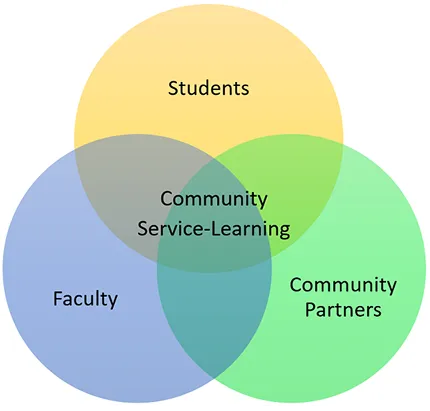
A reciprocal relationship between faculty, community partners and students is central to CSL. Keep reading to learn more about how our office can support the CSL process.
Nipissing University offers Faculty a number of administrative and logistical supports for the creation and delivery of experiential learning opportunities for their students via the Community Service-Learning program.
CSL activities address specific community needs. For example: housing, food security, mental health, advocacy, education, violence prevention, etc. They align with community partner mandates, goals and objectives.
To help build your CSL activity, ask yourself the following questions:
- What are the goals and learning outcomes of my course?
- Where, or how, could my students gain a greater understanding of these notions outside of the classroom?
- What kind of experiential learning will benefit students in my course?
- Which community partner(s) might be a good fit for my course?
- How does this relate to the organization's mandate?
- What process will I require from my students to integrate placements? (interviews, training, etc.)
- How many hours should I assign to this activity, 10 hours, 20 hours, 40 hours?
- How will I assess student learning?
- How will I connect their experiences to theory in the course?
- How will students record or share their experiences?
- How will this benefit students, community partner(s), myself?
- What reflective assignment will follow the experience?
Once your activity has been developed, include the following in your syllabus:
- CSL activity (marketing products, research, communication plan, outreach strategy, translation, fund raising ideas, etc.)
- Name of community partner
- Corresponding reflective assignment (journal, year end presentation, essay, in-class discussion, etc.)
- Grade (20 hours for 20%, 10 hours minimum for 5%, etc.)
- Biidaaban Learning Series: BCSL offers a series of free training workshops for students entering CSL placements at Nipissing University. The workshop series typically includes Intro to Allyship, Sexual Violence and Prevention Training, Healthy Boundaries, and more.
- Timeline (due dates, deliverables, etc.)
- Roles and responsibilities (Faculty, student or student team lead, community partner, CSL Officer, etc.)
CSL can be an optional, or required assignment for students in your class.
The CSL Officer is available to meet with you to plan and brainstorm. We are also available to provide in-class presentations to introduce CSL at the start of the term.
- Supports community
- Creates connections between community partners, faculty and students
- Students gain volunteer experience
- Students are more engaged in class
- Students integrate classroom theory and experience
- Facilitates a dynamic learning environment
- Opportunity for meaningful reflection
A number of administrative and logistical supports are available to faculty for the creation and delivery of CSL:
- Finding placement/volunteer opportunities for students
- Liaising with community partners
- Registering your students' CSL volunteer activities in the Record of Student Development (RSD) database
- Ensuring students get their Police Vulnerable Sector Checks (PVSC)
- Providing students with agreement forms to bring to their placement
- Providing students with health and safety forms
- Providing students with time sheets
- Checking in with community partners
- Aiding with travel plans, itineraries, and bookings (ex.: booking bus to Dokis First Nation)
- Getting students to complete online Health and Safety training
- Room bookings
- Smudge requests
- Printing
- In-class presentations
- Conducting student interviews
- Conducting student surveys
- Attending in-class discussions and final project presentations
To register for the Biidaaban Learning Series, or for more information, please contact the Biidaaban Community Service-Learning Officer at indigenousprograms@nipissingu.ca
Certification
Students who complete CSL projects or placements are eligible to receive a certificate from the Office of Indigenous Initiatives acknowledging their work in support of local community.
Students put theory into practice to gain a greater understanding of Indigenous community and non-profits by:
- Assisting with programming, projects or events
- Creating meaningful programming to support clients and community
- Generating content, planning and engaging with social media
- Attending community meetings/events, board meetings, volunteer meetings, etc.
- Researching grants and writing proposals
- Planning events and supporting logistics
- Augmenting accessibility to resources
- Assisting with fundraising
- Creating and updating print materials and communication tools
- Creating new resources for community partners and the people they support
- Updating websites
- Entering data
- Building awareness
- Administrative support
- Recording stories and experiences
- Augmenting reach and visibility
- Translating
- Assisting with strategic planning
- Drafting and conducting surveys
- Research
- Developing marketing tools
- Providing creative services
- Developing strategies in response to presented challenges
- Participating in outreach and public education
- Advocacy work
This can occur through class discussion, one-on-one debriefs, sharing circles, check-ins, weekly journaling, blogging, or other methods of sharing.
Faculty are responsible for initiating regular and ongoing discussion about student experiences.
The CSL experience allows students to connect course curriculum to what they learn in community. Consider asking why they think certain things might be happening: social issues, lack of human resources, funding, need for volunteers, etc. using lived experience as the starting point for reflection.
CSL activities must be in alignment with the community partner's mandate, goals and objectives. It must enhance their capacity. Think of your intentions for student learning, the goals of your course and how this relates to the organization's mandate.
You may already have a community partner in mind, or you may want to connect with partners who are familiar with this program, having hosted students in the past.
BCSL would like to thank the following: North Bay, Nipissing First Nation, Dokis First Nation, Temagami First Nation, and surrounding area partners for supporting and providing Community Service-Learning opportunities to Nipissing University students:
- AIDS Committee of North Bay and Area
- Amelia Rising Sexual Assault Centre
- Anishinabek Nation
- Big Brother & Big Sisters of North Bay
- Cam's Kids
- Canoe House
- Children's Aid Society
- Community Drug Strategy of North Bay and Area
- Community Living - FJ Dellandrea
- Conseil scolaire catholique Franco-Nord
- District of Nipissing Social Services Administration Board
- Dokis Museum
- Family Enrichment Program
- Heart and Stroke Foundation
- Let the Learning Begin
- Low Income People Involvement of Nipissing
- Nbisiing Secondary School
- Near North District School Board
- Nipissing First Nation
- Nipissing-Parry Sound Catholic District School Board
- Nipissing Transition House (One Pledge)
- Northeastern Ontario Multicultural Centre
- North Bay Food Bank
- North Bay Indigenous Friendship Centre
- North Bay Literacy Council
- North Bay Local Immigration Partnership
- North Bay - Mattawa Conservation Authority
- North Bay Police Service
- North Bay Regional Health Centre - Regional Aboriginal Mental Health Services
- North Bay Regional Health Centre - The Foundation
- Nipissing University Student Union
- Ojibwe Women's Lodge
- Ontario Ministry of Natural Resources and Forestry
- One Kids Place
- PEP Place | People for Equal Partnership in Mental Health
- Providing Adults with Developmental Disabilities Lifelong Experiences (PADDLE)
- Suswin Village
- The Warming Center
- True Self - Debwewendizwin
- White Water Gallery
- YMCA of North Bay
Reflection is key to Community Service-Learning. Types of reflective assignments include:
- In-class discussion, discussion groups or debriefing
- Journals
- Essays
- Collaborative projects
- Oral presentations
- Portfolio
- Group journal
- Letter to self
- Reflective interview
- Artistic reflection
Marks may be tied to placement attendance, participation in group discussion, reflective assignments, and more. Remember, you are marking the reflection and learning that comes from placement experience, not the placement itself.
Student learning is a combination of notions explored in community and in class. Reflective assignments and responses allow students to integrate knowledge and illustrate learning.
Attendance: Students may be required to complete a certain amount of hours (10, 20, 40, etc.). A time sheet helps them keep track of hours. This time sheet can be provided by the CSL team and should be signed by a placement supervisor to confirm attendance.
The Biidaaban Community Service-Learning program connects community organizations with university students and faculty, to work on community generated projects for course credit. Read on to learn more about the various experiential learning opportunities you can create for students to support your organization.
Students can support in a number of ways.
They bring knowledge and skills learned in university courses to organizations, increasing their capacity to meet community needs.
Project-based CSL. Community organizations submit projects to be completed by university students for course credit. The work is done in class, under the guidance of the professor, and outcomes are shared with the community partner once finished. Students can support by:
- Developing marketing tools
- Creating social media content and other communications
- Developing community outreach strategies
- Drafting and conducting surveys
- Assisting with programming, projects or events
- Creative services
- Maintaining engagement on social media platforms
- Augmenting organization reach
- Creating meaningful programming to support clients and community
- Entering data
- Attending community meetings/events, board meetings, volunteer meetings, etc.
- Support event planning and logistics
- Administrative support
- Researching grants and writing proposals
- Assisting with fundraising
- Creating and updating print materials
- Creating resources for community partners and the people they support
- Hosting a Facebook live event
- Reviewing print materials and online platform content, making recommendations
- Participating in outreach and public education
- Advocacy work
- Conducting research
- Etc.
Collaborations can take place in person, virtually or both.
- Community organization to touch base with the class, or designated leads, a few times during the school term for feedback.
- Students to present project outcomes to organization.
Other optional project components (virtual):
- Students to attend staff, volunteer, or board meetings
- Virtual tour of organization physical spaces
- Meet and greet with other staff, clients, or other folks as requested
- Sharing Circles
- Etc.
To submit an opportunity, fill in the "Project Proposal Template" below. We will be happy to discuss ideas and answer questions!
Students can provide from 10 to 20 hours of service per term.
- Fall term: September to November (Exams in December)
- Winter term: January to March (Exams in April)
Students provide, on average, 1-4 hours of service per week, spending time in class working on a project for the organization. Some courses last one term only (4 months) and others last the entire school year (8 months). Some courses are only offered in the first term, some are only offered in the second term.
Community organizations can choose to work with a class for one term only, for an entire school year, or with 2 separate classes during each term. Multiple projects can be submitted for students to work on.
A timeline should be developed between the community organizations and the class teacher.
Submit project details to the Community Service Learning Officer at 705-474-3450 ext. 4772 or email indigenousprograms@nipissingu.ca. We will attempt to find a student or course group to collaborate with you.
BCSL would like to thank the following North Bay, Nipissing First Nation and surrounding area partners for supporting and providing Community Service-Learning opportunities to Nipissing University students:
- AIDS Committee of North Bay and Area
- Amelia Rising Sexual Assault Centre
- Anishinabek Nation
- Big Brother & Big Sisters of North Bay
- Cam's Kids
- Canoe House
- Children's Aid Society
- Community Drug Strategy of North Bay and Area
- Community Living - FJ Dellandrea
- Conseil scolaire catholique Franco-Nord
- District of Nipissing Social Services Administration Board
- Dokis Museum
- Family Enrichment Program
- Heart and Stroke Foundation
- Let the Learning Begin
- Low Income People Involvement of Nipissing
- Nbisiing Secondary School
- Near North District School Board
- Nipissing First Nation
- Nipissing-Parry Sound Catholic District School Board
- Nipissing Transition House (One Pledge)
- Northeastern Ontario Multicultural Centre
- North Bay Food Bank
- North Bay Indigenous Friendship Centre
- North Bay Literacy Council
- North Bay Local Immigration Partnership
- North Bay - Mattawa Conservation Authority
- North Bay Police Service
- North Bay Regional Health Centre - Regional Aboriginal Mental Health Services
- North Bay Regional Health Centre - The Foundation
- Nipissing University Student Union
- Ojibwe Women's Lodge
- Ontario Ministry of Natural Resources and Forestry
- One Kids Place
- PEP Place | People for Equal Partnership in Mental Health
- Providing Adults with Developmental Disabilities Lifelong Experiences (PADDLE)
- Suswin Village
- The Warming Center
- True Self - Debwewendizwin
- White Water Gallery
- YMCA of North Bay
To register for the Biidaaban Learning Series, or for more information, please contact the Biidaaban Community Service-Learning Officer at indigenousprograms@nipissingu.ca.
Students who complete CSL projects or placements are eligible to receive a certificate from the Office of Indigenous Initiatives acknowledging their work in support of local community.
“Will my virtual CSL experience be as valuable as an in-person one?”
A virtual experience is just as legitimate as an in-person one. You need these to build up your resume and your future careers. The BCSL team makes every effort to pair up students with projects and partners that work in fields of interest to students. Committing yourself to such an experience will serve you professionally in the future. Most learned skills are transferable. From working with children, organizing a fund raiser, producing a communication plan, hosting a Facebook event, doing online outreach or creating programming, these skills will serve you across many fields and in many professional settings.
Since many students have had limited access to work since the start of the pandemic, a virtual placement or CSL project is as close as students can get to hands on, real-life experience. This experience could land you a new reference, a community connection, new perspectives. CSL allows students to gain access and insights into organisations like no other.
Additionally, many organisations have satellite offices, partners in other cities, clients in other territories and countries. Learning to work and connect with people from a distance will prepare you for a future career.
“I was hoping to network with partners but am now unsure of how to build those relationships.”
A huge part of the CSL experience is building relationships and networking with supervisors, colleagues, volunteers and clients. There will be opportunities to connect with folks via virtual team meetings, email, phone, and through your work. Positive interactions, be they virtual or in-person, do not go unnoticed. If you participate and contribute ideas, knowledge and positive energy to the CSL project, your investment will pay off. Think about ways that you can use networks like Zoom to help build relationships.
“Without in person supervision, how will I know what is expected of me?”
The CSL project will be planned and reviewed ahead of time, and be presented to you in class, prior to starting your virtual placement, or CSL project. A timeline, list of roles and responsibilities, agreement forms, training, and a student handbook will also be provided. Setting clear expectations is the responsibility of the community partner and faculty. If something is not clear, it is your responsibility to ask for clarification. If you do have questions, ask yourself if you know how to reach out to your community partner representative, team members, classmates, and teacher?
Managing change
Change can be stressful. Self-care, communication and flexibility will be your best assets. Every effort will be made by the BCSL team, your teacher and community organisations to inform you of any possible changes and next steps as far ahead of time as possible. A lot of students have lost jobs, and opportunities in the future seem increasingly uncertain. Your supportive role, working collaboratively and productively on projects that aid community as a whole, is valuable. Always remember that you are not alone.
Students who complete CSL projects or placements are eligible to receive a certificate from the Office of Indigenous Initiatives acknowledging their work in support of local community.
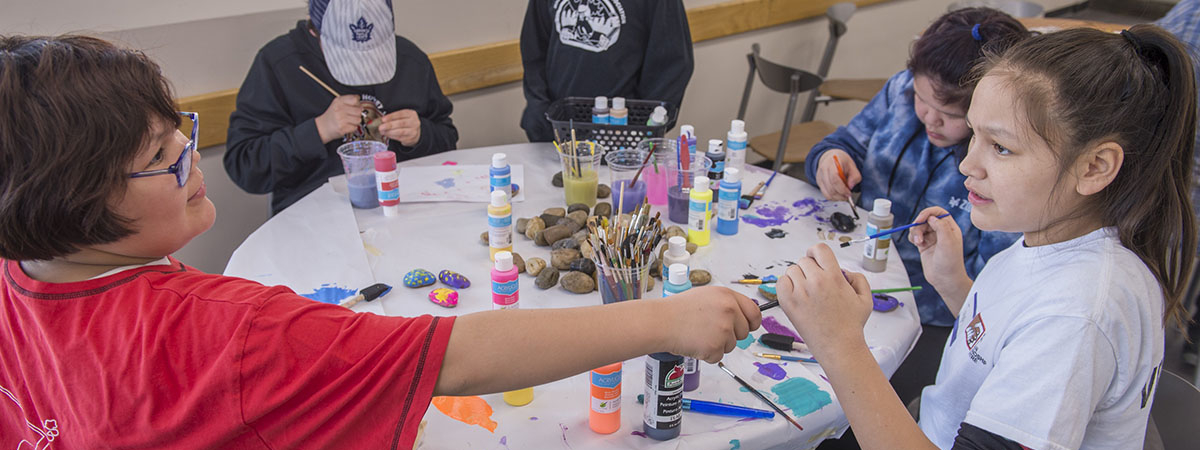
Biidaaban Youth Group (BYG) is an after school program for Indigenous youth in grades 3 to 5.
Nipissing University student employees support youth with their homework and host 1 hour of cultural, social and artistic activities.
Biidaaban Youth Group will take place in person* at the Treaty Learning Centre with the location still to be determined.
*Snow days: Biidaaban Youth Group will be offered virtually on snow days. Participants will receive materials at their place of residence at the start of the program. Links to join the sessions will be emailed the morning of the snow day.
Biidaaban Youth Group takes place on Wednesdays, after school to 4:30 pm.
The Office of Indigenous Initiatives will arrange cab transportation for students to and from the campus. Contact us for more info.
Parents of youth in grades 3, 4, and 5, attending schools in the Near North District School Board are invited to register their children in grades 3, 4, and 5.
Niminowaazmin is the Office of Indigenous Initiatives' year-end celebration for Biidaaban Youth Group and Biidaaban Academic Support, honouring the successes of participating youth, their families, as well as our partners, tutors, student volunteers and employees.
Niminowaazmin is an Anishinaabe word that means "we are celebrating".
For more information, contact the Community Service-Learning Officer at indigenousprograms@nipissingu.ca
Biidaaban Academic Support
Biidaaban Academic Support (BAS) is a tutoring program for local Indigenous youth in grades 1 to 12, with a focus on mathematics and literacy. Nipissing University student volunteers offer one-on-one support, in-person or virtually, either during the school day, or after school hours.
Please complete the registration form below and email to the Biidaaban Community Service-Learning Officer, at indigenousprograms@nipissingu.ca.
October to March. Schedules are adapted to student needs and availability.
North Bay, Sturgeon Falls and Nipissing First Nation.
Eligible schools: Schools fall within the Near North District School Board, Nipissing Parry Sound Catholic District School Board, and Nipissing First Nation.
Open to all Nipissing University students. Register as a tutor by contacting the Biidaaban Community Service-Learning Officer in the Office of Indigenous Initiatives, at indigenousprograms@nipissingu.ca, or drop-in at F215-D, in the Office of Indigenous Initiatives. You will be asked to participate in a casual interview.
Please bring:
- A copy of a valid Police Vulnerable Sector Check (PVSC)
- Your class schedule
Community impact
In order for us to measure the impact of tutoring supports for Indigenous youth and tutors, it is important for tutors to record their work by submitting tutoring reports online. Submit Tutor Report
On average, students tutor for 1-3 hours per week throughout the school year.
Benefits of becoming a Tutor
Support Community
- Connect with real people, share in their experiences, learn from them
- Provide human resources where there is a need
- Enhance social awareness and sense of responsibility
- Get to know your community beyond the campus
Professional Development
- Meet people and network
- Learn from experience
- Develop skills and broaden knowledge (critical thinking, problem-solving, leadership, communication)
Personal Growth
- Gain perspective
- Assess your strengths, motivations and passions
- Increase understanding of concepts learned in class
- Get to know yourself in different contexts and in relation to others
Recognition
The Office of Indigenous Initiatives recognizes the volunteer work of students in community. Biidaaban Academic Support is RSD approved.
For tutors who complete 10 hours or more of tutoring: you could be eligible to receive free training (webinars, workshops, etc.)
Emailing the Biidaaban Community Service-Learning Officer, at indigenousprograms@nipissingu.ca for further information.
In order to qualify for the Biidaaban Academic Support program, we ask that you take the time to view these 3 mandatory workshops (videos):
- Duty to Report (15 minutes, youtube video)
- Tutoring 101 (53 minutes, youtube video)
- Online Etiquette and Professionalism (34 minutes, youtube video)
Support links:
To register, or for more information, email Biidaaban Community Service-Learning Officer, at indigenousprograms@nipissingu.ca.
Niminowaazmin is the Office of Indigenous Initiatives' year-end celebration for Biidaaban youth programs including Biidaaban Youth Group and Biidaaban Academic Support, honouring the successes of participating youth, their families, as well as our partners, tutors, student volunteers and employees.
Niminowaazmin is an Ojibwe (Anishinaabe) word that means "we are celebrating".
Virtual and in person activities to include traditional teachings, cultural and artistic activities, games, and door prizes.
Biidaaban Academic Support is presented in partnership with the Office of Indigenous Initiatives, the Near North District School Board, the Nipissing-Parry Sound Catholic District School Board, and Nbisiing Secondary School at Nipissing First Nation.